Motorhead Quote

"The battlefields are silent now. The graves all look the same." -- Motorhead,Voices from the War
Showing posts with label sunshine magazine. Show all posts

Saturday, August 2, 2025

Forgotten Barber, Unforgettable Battle

Forgotten Barber, Unforgettable Battle: A South Dakota Veteran’s Lifelong Quest to Understand Little Bighorn

An article was published in the November 9, 1936 issue of the Rapid City Journal, detailing the research of Mr. Agner Mosier into the Battle of the Little Big Horn.

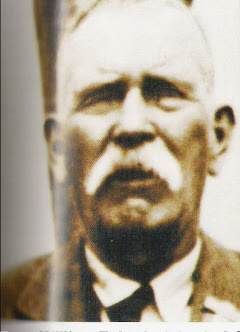
In the quiet halls of the South Dakota State Soldiers’ Home in Hot Springs, an aging veteran found purpose in the pages of history. Agner Mosier, a former barber from Rapid City and a U.S. Cavalryman with the famed Seventh Regiment from 1880 to 1885, spent his later years piecing together one of America’s most mythologized conflicts: the Battle of the Little Bighorn.

Mosier didn’t just study the battle—he walked the land, retraced the movements, and spoke with fellow cavalrymen who had lived through that fateful June day in 1876. His deep dive into the terrain where Custer made his last stand wasn’t for glory or fame. Instead, it was a soldier’s search for understanding—of tactics, survival, and perhaps of the men who fought and fell.

Through his fieldwork and his interviews—particularly with Capt. Frank M. Gibson and Major Marcus A. Reno’s associates—Mosier built a compelling narrative. He dispelled common myths, questioned official accounts, and brought renewed attention to stories that might otherwise have been forgotten. One such figure was Daniel Newell, a survivor of the battle whose firsthand account, published in Sunshine Magazine in the 1930s, deeply influenced Mosier’s understanding.

What sets Mosier apart is how his research leaned into human experience rather than heroic legend. He examined where Reno made his stand, how Indian scouts anticipated Custer’s movements, and why the Gatling guns were left behind. Mosier understood that the battle was less about romanticized bravery and more about preparation, decision-making, and an underestimation of the Lakota, Cheyenne, and Arapaho forces.

His conclusion? The U.S. command’s failure wasn’t simply a matter of being outnumbered. It was strategic error, poor coordination, and a tragic underestimation of the resistance they would face.

The article also paints a vivid picture of Mosier’s humility. Despite being a veteran himself, he doesn't seek the spotlight. Instead, he positions himself as a student of history, learning from those who were there. His work reminds us that history isn't just the domain of scholars in ivory towers—it’s often preserved by ordinary people with extraordinary curiosity.

As we revisit stories like Mosier’s, we’re reminded that the past is not a static collection of dates and names. It is alive in memory, in retelling, and in the quiet diligence of a retired barber with a soldier’s eye and a historian’s heart.

I apologize for the article preview below. If you click on the image, and then right click to save, it will download a copy to your computer which can then be enlarged and read easily.

Rapid City Journal; November 9, 1936


Sunday, July 21, 2024

Daniel Newell at the 50th Anniversary of the Little Big Horn Battle

It's 2024 and we are only two years away from the 150th anniversary of the Battle of the Little Big Horn, on June 25/26, 2026. They are currently working on a new and updated visitor center at the battlefield to be ready for the big anniversary in 2026.

The 50th anniversary was one of the biggest so far. There were still a fair amount of participants, both Indian and white, alive to participate. Battle tactics were discussed and former enemies compared notes on the biggest event of their lives.

Daniel Newell, who is now buried at the Bear Butte Cemetery in Sturgis, attended the 50th anniversary celebration with his wife, Mary. Before returning home, they stopped and visited with friends and former Sturgis residents, Mr. and Mrs. J.W. Bullis at Hardin, MT.

Below is coverage of the anniversary festivities from the Sacramento Bee. General Edward Settle Godfrey was in attendance. He was a first lieutenant during the Little Big Horn battle and was in command of Company K. 

Sacramento Bee; June 25, 1926

Edward Settle Godfrey was a first lieutenant at the Battle of the Little Big Horn.

Daniel Newell, in 1926.

Newell had fought with Reno, and was wounded in the left thigh during the retreat from the valley. He was taken to Fort Lincoln aboard the steamer Far West. His story of the Battle of the Little Bighorn was published in The Sunshine Magazine on September 30, 1930, as “The Story of the Little Bighorn Campaign of 1876.” This was his first time seeing the battlefield in fifty years. Newell was able to locate the former site of the makeshift hospital, where he had been treated for his injuries.

Some of the crowd gathered in 1926 at the battlefield for the anniversary.

Daniel Newell died in Hot Springs, South Dakota, on September 23, 1933.

The Newell grave in Sturgis, South Dakota.

Daniel Newell is buried beside his beloved wife, Mary, in Bear Butte Cemetery, Sturgis, South Dakota.

Saturday, August 15, 2020

Good Day Sunshine

I've been interested in Custer, the Battle of the Little Big Horn, and Plains history for quite some time. In 2007, I started collecting information on the troopers who are buried in my home state of South Dakota. There are actually quite a few, including a couple of the more "big names" among enlisted men - Peter Thompson and Charles Windolph. But as I started to pickup tidbits on these guys I realized they all had an interesting story, regardless of their so-called fame.

Every time I read a book I keep a small notepad close by to jot down any notes pertaining to the 7th Cavalry troopers buried in South Dakota. I keep individual files on each trooper and all the information I find goes into these files. I live in Pierre, the state capital of South Dakota, and home to the SD State Archives. I scratch through the old newspapers on microfilm and their other files looking for mentions of these men. I have collected photos, obituaries, news stories, etc. I'm always on the prowl for new information.

Early on in my research I heard about a magazine that contained articles in which I knew I would be interested - Sunshine Magazine, published in Sioux Falls, Issues of this magazine from back in the 1930's contained articles about Daniel Newell, Charles Windolph, and others. I had to find these magazines. I searched flea markets, Ebay, and other websites, trying to find this elusive treasure. No luck. No one I talked to had even heard of it. I was about to give up.

Then I found something. I saw mention that Custer historian John M. Carroll had collected these articles and published them in pamphlet form. They were published under the title, THE SUNSHINE MAGAZINE ARTICLES, in 1979. OK, now I was more optimistic about my chances of finding these articles.

In 2009, my buddies and I (we call ourselves MONTANA MAYHEM), were in Billings, MT, for the conference of the Little Big Horn Associates. One of the highlights of these conferences in a book room. If you're a history nut, you'll be in heaven hunting through all the books available. While there one of my buddies, Michael Olson, said, "Hey Scott, aren't you looking for this?" I looked over and he was holding a copy of THE SUNSHINE MAGAZINE ARTICLES pamphlet. I rushed over and bought it immediately. The search was over!

It wasn't anything special as far as production value went. It certainly wasn't much to look at. It looked simply like a mimeographed booklet. It was however, signed and numbered (#22 of 100) by Mr. Carroll. I was thrilled. Twenty-nine pages including the introduction and signature pages.


The articles that are of interest to me are under the main title, BULLETS, BOOTS, AND SADDLES. John P. Everett, of Sturgis, South Dakota, personally interviewed some of the participants of the Battle of the Little Big Horn. Two of the included articles were the reason I searched so long for this publication.

After the introduction, there is THE STORY OF THE BIG HORN CAMPAIGN OF 1876 by Private Daniel Newell. Newell is one of the troopers who is included on this website and he gives a great account. His narrative includes mentions of the 1874 Black Hills Expedition, the trip from Fort Lincoln to the Little Big Horn, the death of his "bunkie," and the battle's aftermath. He is buried in Bear Butte Cemetery at Sturgis, SD.

Newell's grave at Bear Butte Cemetery, Sturgis, SD

The next article I was interested in was THE BATTLE OF THE BIG HORN by Charles Windolph. Windolph is one of the more well-known of the enlisted men. He won a Medal of Honor for his actions as a sharpshooter protecting the water parties on their trips to the river during the battle. His book, I FOUGHT WITH CUSTER, was published in 1947. The version of events contained in this interview predates the publication of his book. Windolph was the last white survivor of the Battle of the Little Big Horn, living until March of 1950.

Windolph's grave at Black Hills National Cemetery, Sturgis, SD

I try and collect every reference I can find to these troopers who are buried in South Dakota. I had been searching for THE SUNSHINE MAGAZINE ARTICLES for quite some time and they did not disappoint. Any opportunity you have to obtain primary source material, jump at the chance. Reading these soldier's experiences in their own words is priceless.